
If the Indian government is indeed serious about reversing brain drain, it needs to put much more emphasis on research and innovation, especially in areas that will determine the future, asserts Prosenjit Datta.
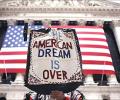
US is the largest market for the over $140 billion Indian IT services industry

The US has received a sufficient number of petitions needed to reach a cap for the much-sought-after H-1B foreign work visas for the fiscal year 2024, a federal agency has announced. The H-1B visa is a non-immigrant visa that allows US companies to employ foreign workers in speciality occupations that require theoretical or technical expertise. Technology companies depend on it to hire tens of thousands of employees each year from countries like India and China.

US President Donald Trump signed a proclamation restricting entry of certain non-immigrant workers and imposing a USD 100,000 fee on H-1B visas, citing abuse of the program and national security concerns.

The US is planning to resume the process of domestic visa revalidation in certain categories, like H-1B and L1 visas, on a pilot basis later this year, a move that will benefit tens of thousands of foreign tech workers, particularly from India. Until 2004, certain categories of non-immigrant visas, particularly the H-1B, could be renewed or stamped inside the US. After that, for the renewal of these visas, in particular, those on H-1B, the foreign tech workers have to go out of the country, mostly to their own country to get the H-1B extension stamped on their passport.

The US needs to understand that it could potentially lose out on attracting several Netravalkars in the future if it curbs the influx of such industrious Indian immigrants, argues Vishal Menon.

This could come as a setback to thousands of Indian engineers who have waited for years for their work visas to pave the way for the coveted Green Card.

The Congress party has strongly criticised the Modi government's decision to introduce a 0.4% Merchant Discount Rate (MDR) on UPI transactions over Rs 2,000, alleging it is a result of US pressure to benefit American card companies. The party also linked this move to broader US actions against India, including tariffs and H-1B visa issues, coining the term "Narendra's Ongoing Trump Appeasement." The government, however, clarified that consumers will not bear the charge, which applies only to merchants.

Where do Indian IT firms stand compared to their global peers in this journey of transformation? Ayan Pramanik seeks answers from IT services analyst Phil Fersht.

The US Citizenship and Immigration Services would accept petitions for the H-1B work visas on the first five working days beginning April 1.

External Affairs Minister S Jaishankar raised India's concerns with US Secretary of State Marco Rubio regarding changes to US visa and immigration policies, emphasising that legal mobility should not be negatively affected. Rubio acknowledged potential 'bumps' during the transition as the US aims to improve its immigration system.

A strident bill concerning US work visas for non-US citizens has been re-introduced before the US Senate. A look at the bill.

It has been the preferred visa for Indian IT companies and has helped them keep costs down and gain a margin advantage over multinational players by sending engineers to the US.

The opposition has intensified its criticism of the government's decision to impose a 0.4 per cent Merchant Discount Rate (MDR) on UPI transactions above Rs 2,000, effective October 15. Leaders like Rahul Gandhi and Jairam Ramesh allege the move is a result of US pressure, particularly from American card companies, and demand an immediate rollback, warning of increased costs for consumers.
The Congress party has accused the Indian government of imposing new charges on UPI transactions due to pressure from the United States, specifically to benefit American card companies. The opposition party demanded the withdrawal of the decision, calling it "anti-national" and alleging it fills the coffers of US firms while burdening Indian citizens. The government, however, clarified that the Merchant Discount Rate (MDR) charges apply only to commercial transactions above Rs 2,000 and are not levied on consumers, a stance supported by the BJP which accused Congress of spreading "fake news".
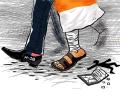
India's $280-billion IT industry heads into 2026, balancing visa-related headwinds and global trade uncertainty against its biggest-ever push into artificial intelligence and the rapid expansion of global capability centres (GCCs). Heightened scrutiny of the US H-1B visa programme - including a proposed $100,000 fee for new visas and concerns over a potential 25 per cent outsourcing tax - has complicated cross-border delivery for Indian firms, even as companies accelerate efforts to reduce reliance on onsite staffing.

Almost all Indian IT companies pay between $8,000 and $10,000 per H1B visa as per the hike
US H1-B visa cap reached within 5 days for 3rd straight year.
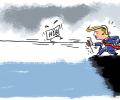
US President Donald Trump is considering suspending a number of employment visas including the H-1B, most sought-after among Indian IT professionals, in view of the massive unemployment in America due to the coronavirus pandemic, according to a media report. The proposed suspension could extend into the government's new fiscal year beginning October 1, when many new visas are issued, The Wall Street Journal reported on Thursday, quoting unnamed administration officials.

Also looks at setting up development and training centres in the US to tide over visa-related issues

Opposition parties, including Congress, TMC, and RJD, have strongly criticised the government's decision to impose a 0.4% Merchant Discount Rate (MDR) on UPI transactions exceeding Rs 2,000 made to merchants. They allege the move is a result of "American imperialism" and will lead to increased commodity prices, while the government maintains the charge is on merchants and not consumers, with person-to-person transactions remaining free.
The opposition has strongly criticised the government's decision to introduce a 0.4% Merchant Discount Rate (MDR) on UPI transactions above Rs 2,000 for merchants, effective October 15. They allege the move is a result of US pressure and will lead to increased commodity prices, calling it a "betrayal" of the common man. The government, however, clarifies that customers will not be charged, and the MDR applies only to merchants for larger transactions.
The Indian IT companies, which account for a large number of H-1B applications, are likely to face the additional financial burden because of this proposed increase in H-1B filing fees.
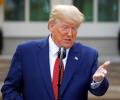
The proclamation that comes into effect on June 24, is expected to impact a large number of Indian IT professionals and several American and Indian companies who were issued H-1B visas by the US government for the fiscal year 2021 beginning October 1.
Here's a look at how many of the visas they and other top Indian outsourcers used...

The Biden administration has proposed a massive hike in immigration fees, including the much sought-after H-1B visas for high-skilled foreign workers, which is very popular among Indian tech professionals. Under the proposed rule, published by the US Citizenship and Immigration Services (USCIS) on Wednesday, the application for the H-1B visa increases from $460 to $780, and L-1 from $460 to $1,385. The application fee for O-1 visas has been proposed to increase from $460 to $1,055.
Dr Arun Vakil discusses US tourist visas, study visa and various work visas. He also details the procedure for using Visa Facilitation Services.
Arun Vakil answers reader questions about F1, H1B and travel visas. How should you present your assets? What questions should you expect from visa officers?
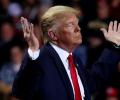
US President Donald Trump has extended the freeze on the most sought-after H-1B visas along with other types of foreign work visas by three months to protect American workers, saying while therapeutics and COVID-19 vaccines are recently available, their effect on the labour market and community health has not yet been fully realised. The decision will impact a large number of Indian IT professionals and several American and Indian companies who were issued H-1B visas by the US government for the fiscal year 2021 beginning October 1. The freeze on various categories of work visas was ordered by Trump through two proclamations on April 22 and June 22 last year.
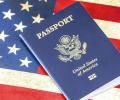
As of September 2025, the expected time of interview appointments for visitor visa (B-1/B-2) at New Delhi was 12 months, far more than the time at other US consulates in the capital cities of top economies of the world.

A year ago, when thousands of people were handed pink slips, the USCIS had received 42,000 H-1B applications.
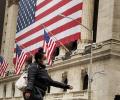
Ahead of Trump's inauguration here on January 20, the debate on foreign guest workers visas for highly skilled professionals, the H-1B, has intensified which has literally created divisions in both the Democratic and the Republican parties.
India's second-largest information technology services provider, Infosys Technologies, has applied for a mere 405 visas till date for financial year 2009-10 - its lowest application count in recent years.
A group of influential lawmakers have introduced a bipartisan legislation in the US Senate to comprehensively overhaul the H-1B and L-1 visa programmes and usher in more transparency in the recruitment of foreign workers. The H-1B visa is a non-immigrant visa that allows US companies to employ foreign workers in speciality occupations that require theoretical or technical expertise. Technology companies depend on it to hire tens of thousands of employees each year from countries like India and China.
Indian outsourcers file the most applications for temporary H-1B visas. Are they using them to train staff for jobs abroad?
US Congress is planning to further tighten provisions on the visas giving employers less flexibility in using them and making them a riskier bet for foreign employees seeking a long-term future in America.

From May 26 onwards, the US Citizenship and Immigration Services will begin accepting applications for work visas from H-IB spouses, reports Aziz Haniffa/Rediff.com.

The United States Citizenship and Immigration Services has announced that it has reached the cap on Congressionally mandated 65,000 H-1B work visas, the most sought after by Indian professionals.

I think the United States must realise that today 60 to 70 per cent of the growth of the revenues of large American companies comes from India and China.
Arun Vakil looks at H1B visas in the United States. He gives an introduction, reviews details and looks at the future of this most desired and least available visa.
